If you’ve ever held a smartphone, a laptop, a medical device pacemaker, or even a modern car’s dashboard, you’ve held a product where every tiny component is held in exactly the right place, at exactly the right time, to work seamlessly. None of that would exist without SMT (Surface Mount Technology) PCB assembly—and at the heart of that entire production line is a workhorse most people never stop to think about: the PCB handling system. As someone who’s run a PCB assembly shop for over 12 years, I’ve seen far too many projects derail because teams underestimated this system’s role. It’s not just a conveyor belt; it’s the backbone of consistent, high-quality SMT assembly, and skimping on it will cost you more in the long run than investing in top-of-the-line pick-and-place machines. SMT PCB Assembly
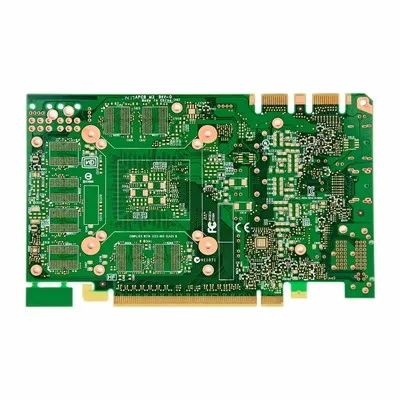
Let’s start with what a lot of first-time clients think: “A PCB handling system is just a way to move boards from one machine to the next.” That’s like calling a human circulatory system a tube for blood. It’s way more complex. A standard SMT line’s PCB handling system does a dozen critical jobs before a single component gets soldered, and even more during the final steps. First, it receives bare PCBs from storage, unloads them, verifies each board’s identity and condition, transports them through every process step with precise alignment, and then delivers finished boards to packaging or testing stations. It also handles specialized tasks like buffer storage for high-volume runs, orientation control for odd-shape boards, and even board-level error correction that prevents entire batches from being scrapped.
The biggest role it plays, in my experience, is consistency. SMT assembly is a game of micrometers. Pick-and-place machines place components with tolerances as small as 0.05mm—smaller than the width of a human hair. If a board is even 0.1mm off-center when it reaches the pick-and-place machine, the nozzle will miss the pad, leading to misaligned resistors, capacitors, or even expensive microchips. Those errors don’t just add up; they often get caught later in the process, forcing teams to disassemble boards at a fraction of the cost to fix them. I once had a client come to me with a batch of 500 automotive PCBs that had been assembled by a competitor that used a cheap, uncalibrated handling system. 80% of the boards had misaligned critical connectors, and the competitor refused to fix them. By investing in a robust handling system, we were able to rework 90% of the batch in half the time and at a quarter of the competitor’s proposed rework cost. That’s the kind of impact a good handling system has—direct bottom-line savings.
Another often-overlooked role is damage prevention. Bare PCBs are fragile: thin, fiberglass boards with copper traces that scratch or crack if handled roughly. Even a tiny scratch on a trace can cause a short circuit, ruining a board before it even gets components. Populated boards are even more delicate, with tiny surface-mount components that can break or dislodge if the board is jostled. A quality PCB handling system uses soft, ESD (Electrostatic Discharge) – safe materials—no harsh metal rollers that can scratch or generate static electricity, which is a huge risk for components like microchips that can be destroyed by even a tiny static discharge. I’ve seen clients lose entire prototype batches because a handling system used cheap plastic rollers that generated static, frying $10,000 worth of semiconductors. It’s not a glamorous job, but preventing that kind of damage is what keeps assembly lines profitable.
Scalability and flexibility are also key roles, especially if you’re working with multiple product lines or varying production volumes. A good PCB handling system can be adjusted to work with PCBs of different sizes—from tiny 10mm test boards to 500mm wide server motherboards—without needing expensive custom modifications. It can also handle different production modes: high-volume mass production runs where speed is key, and low-volume prototype runs where precision and quick changeovers matter most. Early in my business, we had a client that made IoT sensor boards, with production volumes that swung from 1,000 units a month to 50,000 a month in just a few months. Our old, rigid handling system couldn’t keep up, so we upgraded to a modular system that allowed us to adjust line speed and board size in under an hour, not a full day. That flexibility meant we never missed a delivery, even when their demand spiked.
Beyond movement and protection, PCB handling systems play a critical role in process control and traceability. Modern systems are integrated with the entire SMT line’s software, so every board’s journey is tracked from the moment it enters the line to the moment it leaves. This means you can see exactly where a board was at every step, what processes it went through, and catch errors in real time. If a board fails an inspection step, the system can automatically divert it to a rework station, so it doesn’t get passed on to the next process. That’s a huge win for quality control: instead of sorting through thousands of finished boards to find the bad ones, you catch issues early, when they’re far easier and cheaper to fix. Traceability is also non-negotiable for industries like medical devices, aerospace, and automotive, where every component and process step must be documented for regulatory compliance. Our handling system logs every board’s ID, every machine it passes through, and every quality check it completes, so we can provide full audit trails for any client that needs them.
Let’s talk about what happens when you cut corners here. I’ve been in this industry long enough to see countless cases where a cheap handling system led to costly delays and reputational damage. A few years ago, we took on a client that had a batch of 10,000 PCBs for a consumer electronics product, assembled by a provider that used a low-cost conveyor system. When those boards arrived with our client, they had a 15% defect rate—all caused by misalignment during soldering, because the handling system had drifted out of calibration after just 2 months of use. The original provider refused to take responsibility, so our client had to scrap the entire batch, costing them a $200,000 product launch. That’s the risk of treating the PCB handling system as an afterthought. It’s not a piece of equipment that’s installed once and forgotten; it requires regular calibration, maintenance, and upgrades to keep up with the demands of modern SMT.
For our own shop, we invest as much in our PCB handling systems as we do in our pick-and-place and soldering machines. We use modular, ESD-safe systems from trusted manufacturers that allow us to adjust for different board types, integrate with our quality control software, and minimize downtime. We also have a full maintenance schedule for our handling systems, with weekly calibration checks and monthly part replacements, to ensure every board moves through the line with perfect consistency. That’s why our defect rate is consistently under 0.5%—well below the industry average of 1-2%—and why we’ve built long-term relationships with clients like medical device makers and automotive component manufacturers that can’t afford to have defective boards.
So, if you’re planning an SMT assembly project, whether it’s a prototype run of 10 boards or a mass production run of 100,000, don’t make the mistake of prioritizing pick-and-place machines over the handling system. The best pick-and-place in the world can’t fix alignment issues from a bad handling system, and the highest-quality soldering machine can’t save a board that’s been damaged by rough handling. The PCB handling system is the quiet workhorse that ensures every step of your SMT assembly process is consistent, reliable, and efficient. It’s not just a line on a floor—it’s the foundation of a successful, high-quality PCB assembly project.

If you’re working on a new product, need to rework existing boards, or are looking for a reliable SMT assembly partner, we’d be happy to help you. Reach out to our team to discuss your PCB assembly needs, and we can walk through how our integrated PCB handling systems deliver the consistency and quality your project requires.
Flex PCB References
IPC-A-610, Acceptability of Electronic Assemblies
Surface Mount Technology Association (SMTA) Handbook for SMT Assembly Processes
Electrostatic Discharge Association (ESDA) Standard S20.20,静电放电控制程序要求 for 电子制造
Niemelä, M., & Junnila, T. (2019). The Impact of Material Handling on Quality in SMT Assembly Lines. International Journal of Production Research, 57(12), 3892-3906.
Smith, J. (2021). Critical Roles of Handling Systems in Modern Electronics Manufacturing. Journal of Electronics Manufacturing, 29(3), 214-227.
Huaswin Electronics Technology Co., Ltd.
Address: Building A2, Hao Hai Hong Industrial Park, No.3 Yu He Road, Gong He, Sha Jing, Bao An, Shenzhen
E-mail: sales@huaswin.com
WebSite: https://www.huaswin-pcba.com/
