If you’ve ever pulled up to an EV charging station and stared at that jumble of plug types, wondering why there are so many, you’re not alone. I’ve been in the EV charging connector game for a few years now—supplying these parts to installers, dealerships, and fleet operators—and the question I get asked most (after “how much does a charge cost?”) is “what’s the difference between all these connectors?” It’s not just random variation; there are clear levels, tied to how fast you can charge, where you’re using it, and what region of the world you’re in. Let’s break this down like we’re chatting over a coffee, no boring jargon dumps. EV Charging Connector
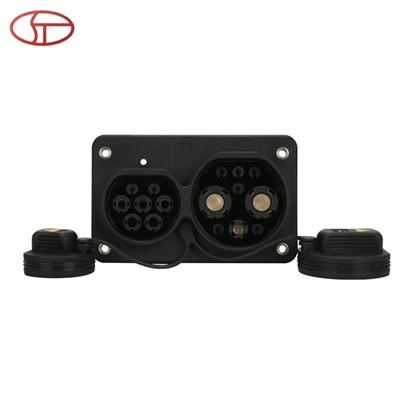
First, let’s start with the basics that most people miss: levels don’t refer to the plug shape itself—they’re tied to the charging power (measured in kilowatts, kW) and the infrastructure that powers the plug. The plug is just the physical gateway between the grid and your car’s battery. So here’s the quick cheat sheet first: Level 1, Level 2, and DC Fast Charging (sometimes called Level 3, though many folks in the biz avoid that term because it’s not standardized everywhere). But I’m not stopping there—because even within these levels, there are regional differences that trip people up.
Let’s kick off with Level 1. This is the slowest, most low-key option, and it’s what you’ll almost always find if you just plug your EV into a regular old wall outlet at home. It uses the same 120-volt AC outlet you have for your laptop or a table lamp, no fancy installation needed. Most EVs come with a Level 1 cable included in the purchase, too—we supply a ton of these for new car dealers, because people don’t want to drill holes in their garage walls right away. How fast is it? Roughly 4 to 5 miles of range per hour of charging. So if you park your Tesla Model 3 or Chevy Bolt at night and plug in at 10 PM, wake up at 6 AM, that’s 8 hours—you’re looking at 32 to 40 miles of range, which is perfect for a commute. The only downside? If you drive 60 miles a day, you’ll need two nights just to fill up, and it can strain older outlet circuits if you’re running other high-power stuff (like a space heater) at the same time. For us as a supplier, Level 1 connectors are the bread and butter for residential use cases—they’re cheap, low-maintenance, and get new EV drivers comfortable with charging before they upgrade.
Next up is Level 2, the workhorse of EV charging. This is where most public charging stations (not the fast ones) live, and most people install this at home after a year or two. It uses a 240-volt AC outlet, same as a clothes dryer or an electric stove, so you do need a professional to install a dedicated circuit, but it’s worth it. How fast? 25 to 60 miles of range per hour of charging—so if you plug in for 8 hours, that’s 200 to 480 miles, which is enough for most daily driving and even a weekend road trip. Here’s where the regional plug differences get real: in North America, the standard Level 2 connector is called J1772 (pronounced “jay-one-seven-seven-two”). It’s that rounded, five-pin plug you’ll see at most office parking garages and grocery store charging spots. In Europe, they use Type 2 (also called Mennekes), a similar-looking but keyed plug that won’t fit a North American J1772. We stock both, obviously—we can’t sell J1772s in Germany or Type 2s in Ohio, that’s a quick way to lose a customer. A lot of new drivers mix these up, too: I’ve had a fleet operator come to us confused because their delivery vans (with Type 2 plugs) wouldn’t fit the Level 2 stations downtown. It’s not a manufacturing defect, just regional standardization. Level 2 is also the most common for apartment complexes and workplace charging, because it’s affordable to install compared to fast charging, and it’s fast enough to top up during a workday.
Now the big one that everyone gets excited about: DC Fast Charging (DCFC). This is the stuff that lets you add 100+ miles of range in 15 to 20 minutes, perfect for road trips or when you’re on a tight schedule. The big difference between Level 1 and 2? Those use Alternating Current (AC), which your car has to convert to Direct Current (DC) before it goes into the battery. That conversion takes time, which is why Level 1 and 2 are slow. DC fast chargers skip that conversion and send DC straight to the battery, so it’s way faster—up to 350 kW these days, which is why newer EVs (like the Kia EV6 or Hyundai Ioniq 5) can go from 10% to 80% charge in under 20 minutes. But here’s where it gets complicated, again because of regions. In North America, the two main DCFC connectors are CCS (Combined Charging System) and the old-school CHAdeMO (pronounced “CHAH-deh-moh”). CCS is the newer one, and it’s taking over—most new EVs from Ford, Tesla (wait, not Tesla—we’ll get to that), GM, and Volkswagen use CCS. It’s actually a J1772 Level 2 plug with two extra pins at the bottom, so you can plug into either a Level 2 station (using just the top part) or a DC fast charger (using all five pins). That’s a big win for drivers who don’t want to carry multiple cables. CHAdeMO, on the other hand, is what Nissan Leaf, older Mitsubishi Outlander PHEVs, and some commercial fleets use. It’s a bigger, bulkier plug, and you can’t use it for Level 2 charging—only DC fast. We still supply a lot of CHAdeMO connectors, because there are millions of Leafs on the road, and they’re used in delivery fleets that need fast top-ups. In Europe, it’s similar but with a twist: CCS uses the Type 2 base plug (instead of J1772), and CHAdeMO is still around, but more and more stations are switching to CCS. And in Asia—Japan, Korea, China—CHAdeMO is still king in some places, and China has its own standard, GB/T, which you can’t use anywhere else. That’s the tricky part for suppliers like us: we have to keep up with which regions are ditching which plugs, so we don’t end up with a warehouse full of obsolete parts.
Wait, let’s talk about Tesla, because everyone asks about Tesla plugs. Tesla has its own connector, the North American Charging Standard (NACS), which was originally only for Tesla’s own Superchargers. For years, that meant Tesla drivers used a unique plug, and everyone else used CCS. But in 2023, Ford, GM, and a bunch of other automakers announced they’re switching to NACS for their new EVs starting in 2025, and Tesla opened up the standard so other charging networks can use it. Suddenly, NACS is on track to become the de facto connector in North America, which is huge for us. We’ve already started ramping up production of NACS connectors, because a lot of charging network operators are retrofitting their stations to support it, and automakers are asking for NACS parts instead of CCS. It’s a big shift, but it makes sense—Tesla’s Supercharger network is the most reliable in North America, so everyone wants in on that.
Now, let’s clear up a common misconception: the “level” doesn’t always equal the plug. You can have a CCS plug for Level 2 charging (it just works slower) or a Type 2 plug for DC fast charging (called CCS Type 2 in Europe). The plug is just a physical connector; the level is the power output. I’ve had installers come to us saying, “I need a Level 3 plug,” and I have to correct them: “Level 3 is the charging type, not the plug name.” That’s a mistake a lot of new people in the industry make, so it’s good to get that out of the way.
Another thing to consider when it comes to connectors: durability and compatibility. As a supplier, we don’t just sell a plastic plug and call it a day—we test every connector to make sure it can withstand weather, snow, rain, and someone plugging and unplugging it thousands of times. EV charging stations are outside most of the time, so a connector that breaks after a year is a waste of money for the installer. We also make sure our connectors work with all major EV models, because nothing’s worse than setting up a charging station only to find out no one can plug into it. That’s why we have a testing lab on site—we run cold tests (down to -40°F, which is necessary for places like Minnesota or Canada), heat tests (up to 120°F for Arizona), and durability tests to make sure our connectors hold up.
Wait, should I mention the 80% rule? It’s not directly about connectors, but it’s a good tip for drivers: most EVs slow down charging after they hit 80% to protect the battery, no matter what level you’re on. So even if you’re at a 350 kW DC fast charger, you might only pull 150 kW after 80%. That’s not a flaw in the connector, just a battery management system thing. But drivers often blame the connector, so it’s good to know the difference.
Now, let’s tie this back to why this matters for you, whether you’re an EV driver, a business owner looking to install charging, or someone in the industry. If you’re buying an EV, check what connector it uses—don’t assume it’s the same as your neighbor’s. If you’re installing charging stations for a business, make sure you’re using the standard connector for your region, and consider future-proofing: if you’re in North America, installing a NACS-compatible station now means you won’t have to retrofit it in two years when more cars use NACS. That’s exactly what we tell our clients—we don’t just sell them a connector, we help them pick one that works for their current needs and will work for the next 10 years.

I know this got a bit detailed, but it’s all stuff I’ve learned from dealing with installers, automakers, and drivers every single day. At the end of the day, it’s not just about how many types of connectors there are—it’s about making sure the right connector is in the right place for the job. If you’re a driver confused about which plug fits your car, or a business owner looking to set up charging, or even a fellow connector nerd who wants to geek out over standards, feel free to reach out to us for more info. We can help you pick the right connectors for your needs, no jargon, no hassle.
EV Charging Connector References:
- International Energy Agency. (2024). Global EV Charging Infrastructure Outlook.
- Society of Automotive Engineers (SAE). J1772: Electric Vehicle Conductive Charge Coupler.
- European Committee for Standardization (CEN). EN 62196: Plugs, socket-outlets, vehicle connectors and vehicle inlets for conductive charging of electric vehicles.
- US Department of Energy. Alternative Fuels Data Center: Electric Vehicle Charging Levels.
- Charging Interface Initiative (CharIN). Combined Charging System (CCS) Standard.References:
- International Energy Agency. (2024). Global EV Charging Infrastructure Outlook.
- Society of Automotive Engineers (SAE). J1772: Electric Vehicle Conductive Charge Coupler.
- European Committee for Standardization (CEN). EN 62196: Plugs, socket-outlets, vehicle connectors and vehicle inlets for conductive charging of electric vehicles.
- US Department of Energy. Alternative Fuels Data Center: Electric Vehicle Charging Levels.
- Charging Interface Initiative (CharIN). Combined Charging System (CCS) Standard.
Zhejiang Shitu Electric Co., Ltd.
As one of the most professional ev charging connector manufacturers and suppliers in China, we offer a wide range of products with superior quality. Please feel free to buy custom made ev charging connector from our factory. Good service and reasonable price are available.
Address: 1st and 2nd floors of Building C, Yueshang Entrepreneurship Park, Yueqing Economic Development Zone
E-mail: stdq@cnshitu.cn
WebSite: https://www.shitu-connect.com/
