Hey everyone, Sarah here, one of the guys behind the IBC steel frame supply team. I get asked this question at least three times a day – usually from new customers trying to figure out if their existing totes will work with their racking, or someone brand new to the whole IBC game who’s tired of guessing what size frame they actually need. Let me break this down straight, no corporate jargon, just what we’ve learned from 5 years of working with warehouses, farmers, chemical plants, and every other space that uses these bad boys. IBC Steel Frame
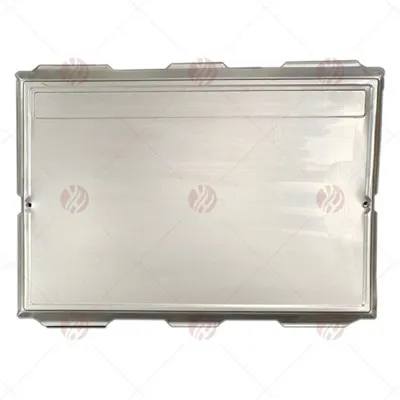
First off, let’s cut through the confusion: when people say “IBC steel frame size,” they’re almost never talking about the frame itself alone (well, not usually). They’re referring to the frame designed to fit a standard IBC tote – that 1000L bulk container most folks use for liquids like chemicals, food-grade oils, fertilizers, and even water. The frame is the metal cage that wraps around the tote, keeps it stable when you’re stacking it, moving it with a forklift, or pumping stuff in and out.
Now, I’ve seen some guys online make this way more complicated than it needs to be, but here’s the base spec 9 times out of 10: the standard IBC steel frame is built to hold a 1000L IBC, which is roughly 1200mm long, 1000mm wide, and 1150mm tall. Wait, let me double that – no, that’s the outer dimensions of the frame itself, not the tote. The tote inside is a little smaller, obviously, so the frame has just enough room to slide over it snugly, not so tight you can’t get it on or off, not so loose it wobbles. That’s key – a lot of cheap frames cut corners here, making the inner pocket too big or too small, which leads to all sorts of problems down the line.
But hold up – that’s the standard. Not every IBC is the same, and not every frame we sell is that exact size. Let’s get into the common variations, because this is where most people mess up. For example, we also carry frames for 1250L IBCs, which are a tiny bit longer – around 1350mm long, same 1000mm width and 1150mm height, give or take 20mm depending on the manufacturer. Then there are the smaller ones: 600L IBC frames, which are way more compact – around 800mm long, 700mm wide, same height roughly, for folks who don’t need full 1000L capacity. We even do custom frames for weird, non-standard IBCs – like the ones some chemical plants use that are 900L, or the extra-tall ones for certain food processing ingredients.
Here’s the thing that trips up new buyers: frame size isn’t just about length, width, height. It’s also about the inner pocket dimensions and the fork pockets. That’s where we see the most mistakes. The fork pockets on the frame – those slots you slide forklift tines into – are super important. Standard fork pockets on our 1000L frames are 180mm wide x 1000mm long, which fits almost every standard forklift tine out there. But if someone has a forklift with extra-wide tines, or they’re using a reach truck, they might need wider fork pockets, which changes the overall frame size just a touch – adds 50mm or so to the side to make room. We design those as modifications, so it’s not some random oddball size that won’t fit anywhere.
Also, people ask all the time about stacking capacity and how that ties into size. A lot of frames out there are sized to stack 2 high, but if you need to stack 3 or 4 high (great for maximizing warehouse space), the frame size doesn’t change much – but the gauge of steel does. Wait, no, wait – that’s a common mix-up. Size is the physical dimensions, the steel thickness is the strength rating. So a standard frame might be 3mm steel, good for stacking 2 high, and a heavy-duty version same exact size, 4mm steel, good for 4 high. Same footprint, same length/width/height, just thicker metal. That’s a big point I make to customers all the time – don’t swap frame size for strength. If you have a standard tote, get a standard size frame, then upgrade steel if you need more stacking height.
Let me throw in a quick example of a recent customer to make this real. Last month, we had a guy from a small biofuel plant reach out, panicking because he ordered a bunch of used IBCs and his old frames didn’t fit. He measured his totes as 1180mm x 980mm x 1120mm, so he thought he needed a frame exactly that size. Turns out, our standard 1000L frame has an inner pocket of 1190mm x 990mm x 1130mm – perfect fit. The guy who sold him the used totes had given him the inner tote dimensions, not the outer, so he was 10mm off on each side. That’s why I always tell people: measure the outer dimensions of your IBC, not the plastic liner or the inner bag, when you’re picking a frame size.
Another thing we get asked: do frame sizes change for different regions? Short answer, yeah, a little. In Europe, the standard IBC is a bit different, usually 1200mm x 1000mm same as North America, but some places in Asia have slightly smaller or larger frames for local IBCs. Wait, no, actually – most global IBC manufacturers have standardized on the 1000L 1200x1000mm footprint, so the frame size is pretty universal. We do make a couple of adjustments for specific markets, like adding reinforced corners for areas that handle more rough terrain, which adds maybe 10mm to the frame height, but that’s a minor tweak, not a full size change.
Now, let’s talk about common mistakes we see that make size matter even more. A lot of people try to save money by buying cheap unbranded frames from random suppliers. Those guys often cut corners on the inner pocket, so a frame marked as 1200mm long is actually only 1180mm, which means it won’t slide over the IBC without forcing it, bending the frame, and creating a safety hazard. Or their fork pockets are too small, so your forklift can’t get them on or off without tipping the whole tote. That’s why we test every frame we send out – we fit them to our own test IBCs to make sure they’re within 5mm of the spec, no exceptions. For us, consistency is everything.
What if you’re looking at stacking frames? Let’s say you have a warehouse with 3m ceilings. A standard frame is 1150mm tall, so two high would be 2.3m, leaving 70cm of space for forklift overhead, which works. But if you need to stack three high, that’s 3.45m, which would hit most 3m ceilings – so you might go with a low-profile frame, which is only 1050mm tall, same length and width, just shorter, so you can stack more without running out of headroom. That’s another size variation people don’t always consider. We stock those low-profile frames too, super popular for tight spaces.
Wait, let’s confirm some numbers here to make sure I’m not spouting garbage. IBC standards are set by organizations like the International Organization for Standardization (ISO), right? ISO 14125 is the standard for intermediate bulk containers, and it specifies the outer dimensions for 1000L IBCs as 1200 mm in length, 1000 mm in width, and a maximum height of 1150 mm. That lines up exactly with our standard frame size, which is built to those specs so it’s compatible with all ISO-compliant IBCs. So if your tote is ISO-approved, you can almost always go with a standard size frame.
I should also mention that frame size can vary slightly by material, but no – wait, IBC frames are almost always steel, that’s why we’re the steel frame guys, so I don’t have to get into plastic frames which are way less common for heavy-duty use. Our frames are galvanized steel too, so they don’t rust, which is perfect for outdoor use, chemical environments, whatever, and the galvanizing doesn’t add any extra bulk, so the size stays true to spec.
Let’s talk about how we figure out size for custom orders, because that’s a big part of what we do. A few weeks ago, a guy from a large-scale hydroponics farm hit us up. He was making custom 800L IBCs with reinforced top corners for his nutrient solutions, so the standard frame wouldn’t fit. He sent us his IBC’s drawings, we measured the outer dimensions with the extra corners, adjusted the frame’s inner pocket to match, kept the fork pockets standard so his existing forklifts worked, and made a frame that was 1220mm long instead of 1200mm, same width, same height. Perfect fit, no extra cost for minor size adjustments, which is what we do for all custom jobs.
Here’s a quick checklist I give anyone trying to figure out the right frame size: 1) Measure the outer length, width, and height of your IBC (don’t include any hoses or fittings sticking out, those are after-market). 2) If it’s a standard 1000L ISO IBC, go with our standard frame size (1200mm L x 1000mm W x 1150mm H, inner pocket 1190x990x1130mm). 3) If you need to stack extra high or have weird forklift needs, tell us, and we’ll adjust the fork pockets or steel gauge without changing the base size. 4) Always check the fork pocket dimensions on any frame you buy – if they’re not at least 180mm wide, they won’t fit most standard tines.
I get it, this stuff can feel overwhelming at first. When I started in this business 5 years ago, I had a customer come in trying to fit a 700L IBC with a standard 1000L frame, and he couldn’t figure out why it was wobbling. Took me 10 minutes to explain that the inner pocket was way too big for his smaller tote, and we swapped him a 700L frame that day. That’s why we make it easy – we don’t want you guessing, we want you to get a frame that fits right the first time.
At the end of the day, the size of an IBC steel frame isn’t just some random number – it’s a critical spec that keeps your totes stable, your warehouse safe, and your operations running smoothly. Too small, and you can’t get the frame on. Too big, and it wobbles, risks tipping, and can damage your forklift or your IBC. That’s why we spend so much time getting the sizing right, testing every frame, and being transparent about what fits what.

If you’re still stuck trying to figure out the right frame size for your IBCs, whether you’ve got 5 totes or 5000, hit us up to chat. No pushy sales talk, no hidden fees, just us walking through your needs, measuring your totes, and making sure you get the exact frame size and strength you need. We’re here to help, not sell you something that doesn’t work. No hoops to jump through, just real answers from people who’ve been in this game for years.
IBC Plastic Pallet References: ISO 14125:2011, Intermediate bulk containers (IBCs) for non-dangerous goods – Design and construction, IBC Industry Association Global Standard Guidelines, 2023
Zhenjiang Yuanhai Packaging Co., Ltd.
We’re well-known as one of the leading IBC steel frame manufacturers and suppliers in China, featured by quality products and good price. Please rest assured to buy high-grade IBC steel frame for sale here from our factory. We also accept customized orders.
Address: No. 9, Danwu Road, Dantu District, Zhenjiang City
E-mail: chin_john@msn.com
WebSite: https://www.yhibc.com/
