If you’ve ever spent time in a water treatment facility, a pharmaceutical manufacturing lab, or even a local brewery, you’ve probably used membrane technology without realizing it. Membranes are the unsung workhorses of modern separation science, designed to sift out unwanted particles, microbes, or contaminants while letting desired substances pass through. But walk into any industry conference or suppliers’ showroom, and you’ll quickly realize not all membranes are created equal. As a hollow fiber ultrafiltration (UF) membrane supplier who’s worked directly with plant engineers, lab managers, and small business owners for over a decade, I’ve lost count of how many times I’ve been asked: “How is your hollow fiber UF membrane different from the other membranes we’re looking at?” Hollow Fiber Ultrafiltration Membrane

The short answer is that each membrane type is engineered for a specific job, and choosing the wrong one doesn’t just lead to extra costs—it can derail entire projects. Over the years, I’ve seen a brewery spend six months troubleshooting a filtration system because they picked a reverse osmosis (RO) membrane that stripped out too many of the flavor compounds they were trying to preserve. I’ve also helped a municipal water treatment plant cut their maintenance costs by 30% when they swapped out ceramic microfiltration (MF) membranes for our hollow fiber UF units, because the hollow fiber design required fewer replacements and cleaned easier. Let’s break down the key differences, starting with the fundamentals that set hollow fiber UF apart from other common membrane types.
First, let’s get clear on the core role of each membrane category, organized by pore size—this is the simplest and most important way to distinguish them. All membranes work like a super-fine sieve, but their pore sizes vary so much that you could fit billions of them side by side and not match each other’s scale. Microfiltration (MF) membranes have pores ranging from 0.1 to 10 micrometers (µm), which means they catch big stuff like sediment, bacteria, and large suspended solids. Ultrafiltration (UF), including our hollow fiber line, has pores between 0.01 and 0.1 µm—small enough to trap most bacteria, viruses, and colloids, but large enough to let water, small molecules, and even salts pass through. Then there’s nanofiltration (NF) at 0.001 to 0.01 µm, which is great for softening water and removing divalent ions, and reverse osmosis (RO) at less than 0.001 µm, which strips out nearly all dissolved solids. The problem many buyers run into is trying to use the wrong pore size for their needs: an RO membrane will waste energy and damage equipment if you’re just filtering pond water, while an MF membrane won’t catch viruses if you’re treating drinking water for a small community.
But pore size is only part of the story—the other big difference is the membrane’s physical structure, and this is where hollow fiber UF really shines compared to flat-sheet, spiral-wound, or ceramic membranes. Let’s start with spiral-wound membranes, which are the most common alternative you’ll find in RO and NF systems. Spiral-wound membranes are made by sandwiching two flat membrane sheets around a permeate carrier, rolling the whole thing up like a jelly roll, and sealing it into a cylindrical casing. They’re affordable for large-scale operations, but they have a major flaw: they’re prone to fouling, which is when contaminants stick to the membrane surface and block pores, reducing flow. I once had a food and beverage client who was using spiral-wound RO membranes for their process water, and they were replacing every three months because of fouling from yeast residuals. When we switched them to our hollow fiber UF membranes, which have an open, tube-like structure that lets water flow through the center rather than along the surface, their membrane life jumped to 18 months. The reason hollow fiber avoids fouling so well is that the water path is straight through the fiber, not forced to twist around layers like in spiral-wound designs. This also means we can pack more membrane surface area into a smaller space—our standard hollow fiber module has twice the surface area of a spiral-wound unit of the same footprint, which cuts down on the number of modules you need to install.
Next, there are flat-sheet membranes, which are often used in small-scale lab equipment or disposable filtration systems. Flat-sheet membranes are thin, flexible sheets of material, usually made of polymer like PVDF or cellulose, that you mount between two plates. They’re cheap for low-volume use, but scaling them up is a headache. If you need to filter 10,000 gallons of water a day, you’d have to stack dozens of flat sheets, which requires complex piping and regular disassembly to clean—something most commercial operations don’t have time for. Hollow fiber solves this by being self-contained: each module is a bundle of hundreds or thousands of tiny hollow fibers, sealed at both ends like a tube of uncooked spaghetti, so you don’t have to take apart the system to replace or clean the membrane. A pharmaceutical client I worked with last year was producing sterile injectable solutions, and they were using flat-sheet membranes that took four hours to clean each shift, cutting into production time. Switching to our hollow fiber UF modules reduced their cleaning time to 45 minutes and eliminated the risk of cross-contamination from disassembled parts. That’s not just a small win—that’s a $20,000 a month boost in production, and that’s the kind of difference the right membrane can make.
Then there’s ceramic membranes, which are often seen as the “heavyweight” option for high-temperature or harsh chemical environments. Ceramic membranes are made of aluminum oxide or zirconium, fired into a flat or tubular shape, and they’re extremely durable. But they’re also heavy, fragile, and way more expensive than hollow fiber. A single ceramic module can cost 10 times more than our hollow fiber UF equivalent, and installation requires heavy lifting and specialized support structures because of their weight. I once had a power plant client looking for a membrane to treat their boiler feed water, and they were considering ceramic because the process uses high temperatures. We were able to explain that our modified PVDF hollow fiber membranes are rated for temperatures up to 80°C, which is more than enough for their application, so they saved 75% on upfront costs and still got a membrane that lasted five years. The only time ceramic makes sense is if you’re working with chemicals that would eat through polymer membranes, or temperatures above 80°C—for almost every other use, hollow fiber UF is a more cost-effective, practical choice.
Now, let’s talk about practical use cases, because this is where the rubber meets the road, and where I see buyers make the most mistakes. Let’s start with municipal drinking water treatment, which is one of the biggest markets for hollow fiber UF. Municipal plants need to remove bacteria, viruses, and turbidity from raw water, but they don’t want to spend a fortune on energy or waste. Hollow fiber UF is perfect here because it can remove 99.99% of bacteria and 99.9% of viruses, meets EPA standards, and uses 50% less energy than RO systems. Contrast that with MF, which can remove bacteria but not all viruses, so you’d still need a disinfection step like chlorine, whereas UF can do the removal in one step. I worked with a small town in Ohio a few years ago that was using MF membranes and having regular outbreaks of E. coli because the MF pores were too large to catch smaller viruses. Swapping to our hollow fiber UF membranes eliminated the outbreaks, and the town didn’t have to upgrade their entire system, just the membrane modules.
Another common use case is food and beverage, which is where membrane selection is super sensitive. Breweries, for example, need to filter out yeast and sediment from beer, but they also need to preserve the flavor compounds that make each beer unique. RO membranes would strip out those flavor compounds, resulting in a bland product. MF membranes can let yeast pass through, leaving a cloudy beer. Hollow fiber UF is the sweet spot here—it catches yeast, bacteria, and large protein particles, but lets the flavor molecules pass through, resulting in a clear, consistent beer without losing taste. I’ve worked with craft breweries that started with MF and had to add a secondary filtration step, only to switch to hollow fiber UF and eliminate that step entirely, cutting their production time by two days per batch. For dairy plants, hollow fiber UF is used to concentrate whey protein for protein powders, again because it separates the protein from water and lactose without damaging the protein structure, which is crucial for product quality.
Then there are industrial applications, like pharmaceutical manufacturing and wastewater treatment. Pharma needs sterile water for drug production, and hollow fiber UF can remove endotoxins and other microbial contaminants that would ruin a batch. Wastewater treatment plants use hollow fiber UF to treat effluent before it’s discharged into rivers or reused for irrigation, because it can remove microplastics, pharmaceuticals, and micro-organisms that other membranes let through. I had a client in the oil and gas industry that needed to treat produced water (water that comes up with oil during drilling) to reuse it for fracking. They tried spiral-wound RO membranes, which fouled within a week because of the high levels of oil and suspended solids. We supplied them with our oil-resistant hollow fiber UF membranes, which have a hydrophobic coating that repels oil, and their membranes are still running after three years with only quarterly cleaning. That’s the kind of performance that makes hollow fiber UF stand out—when other membranes fail under harsh conditions, hollow fiber adapts.
Now, I want to be honest here—hollow fiber UF isn’t the right choice for every job. If you need to remove dissolved salts, like desalinating seawater, you need RO. If you need to remove only large sediment and don’t care about viruses, MF is cheaper. If you’re working at 120°C with strong acids, ceramic is the only option. But for the vast majority of separation and filtration needs in water treatment, food and beverage, pharma, and industrial processing, hollow fiber UF is better than the alternatives when you consider upfront cost, operating cost, maintenance, and performance.
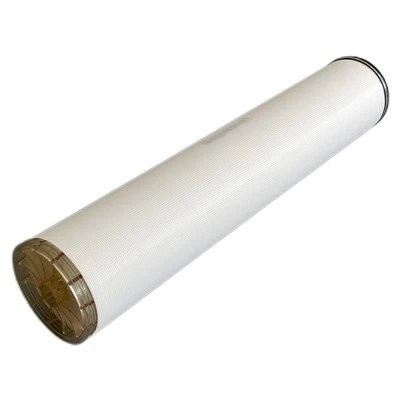
Let me end with a story that sums up why I care so much about getting the right membrane for each client. A few years ago, a small manufacturing startup contacted me, desperate because the membrane they had been using wasn’t working. They were making a specialty cleaning product and needed to filter out tiny polymer particles to make the product clear and consistent. They had tried flat-sheet MF, which let the particles through, and RO, which stripped out the active cleaning ingredients, so they were ready to scrap their entire production line. We sent them a small sample of our hollow fiber UF membrane, and within a week, they called back saying it worked perfectly. That membrane is now part of their core production, and they’ve grown to supply 12 states with their product. That’s the impact of choosing the right membrane—not just for efficiency, but for making a business possible.
Tubular Modules If you’re researching membranes for your next project, whether you’re a plant engineer, lab manager, or small business owner, don’t just go for the cheapest option or what you’ve always used. Ask questions: What contaminants do you need to remove? What’s your operating temperature and pressure? How much maintenance can you handle? How long do you want your membranes to last? That’s where we come in. We don’t just sell hollow fiber UF membranes—we help you pick the right membrane type for your specific needs, answer questions about fouling, cleaning protocols, and module sizing, and provide support long after installation. Whether you’re treating municipal water, brewing beer, or manufacturing pharmaceuticals, we can help you find a solution that’s efficient, cost-effective, and delivers consistent results. If you’re ready to stop troubleshooting membrane systems and start getting reliable performance, reach out to us to discuss your project.
References
- Baker, R.W. (2012). Membrane Technology and Applications, 2nd ed. Wiley.
- Li, N.N., Fane, A.G., & Ho, W.W. (2011). Advanced Membrane Technology and Applications. Wiley.
- Van der Bruggen, B., Vandecasteele, C., & Van Gestel, T. (2003). “A review of pressure-driven membrane processes in wastewater treatment and water reclamation.” Desalination, vol. 155, no. 1, pp. 43–58.
- Kim, J.H., & Lee, K.H. (2001). “Hollow fiber membranes for water treatment: A review.” Journal of Membrane Science, vol. 185, no. 1, pp. 1–23.
Hangzhou Nanoimp Environmental Technology Co., Ltd.
With abundant experience, we are one of the most professional hollow fiber ultrafiltration membrane manufacturers and suppliers in China. Welcome to wholesale high quality hollow fiber ultrafiltration membrane in stock here and get pricelist from our factory. We also accept customized orders.
Address: Road 25, Baiyang Street, Qiantang District, Hangzhou City, Zhejiang Province
E-mail: keith.wang@nano-sepmer.com
WebSite: https://www.nanoimp-membrane.com/
