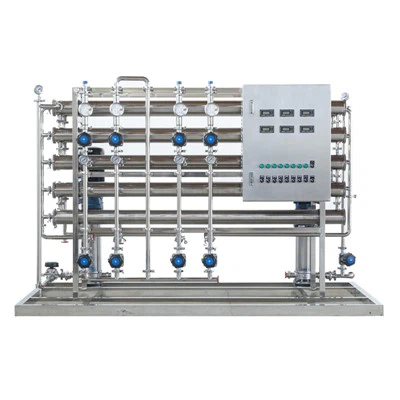
Deionized water, also known as demineralized water, is water that has had its mineral ions removed, such as cations like sodium, calcium, iron, and copper, and anions such as chloride and sulfate. In a laboratory setting, deionized water is of utmost importance as it is used in a wide range of applications, from general cleaning to highly sensitive chemical analyses. As a supplier of Deionized Water Systems, I understand the crucial role that water quality plays in ensuring the accuracy and reliability of laboratory results. In this blog post, I will delve into the water quality standards for a Deionized Water System in a laboratory. Deionized Water System
Understanding the Basics of Deionized Water
Before we discuss the specific quality standards, it is important to understand how deionized water is produced. Deionization is a process that uses ion exchange resins to remove ions from water. These resins are typically composed of a polymer matrix with attached functional groups that can attract and bind to specific ions. As water passes through the ion exchange column, the ions in the water are replaced with hydrogen and hydroxide ions, which combine to form water.
The deionization process can be either single-pass or multi-pass. In a single-pass system, water flows through a single ion exchange column. This is suitable for applications that require relatively low purity water. In a multi-pass system, water is passed through multiple ion exchange columns, resulting in a higher level of purity. Additionally, some deionized water systems may incorporate other purification steps, such as reverse osmosis, to further remove impurities.
Water Quality Parameters
There are several key parameters that are used to measure the quality of deionized water in a laboratory. These parameters include resistivity, conductivity, total organic carbon (TOC), bacterial count, and particulate matter.
Resistivity and Conductivity
Resistivity and conductivity are two sides of the same coin. Resistivity measures the ability of water to resist the flow of an electric current, while conductivity measures the ability of water to conduct an electric current. In general, the higher the resistivity of water, the purer it is. For laboratory applications, deionized water typically has a resistivity of at least 10 megohm-cm. Ultra-pure water used in highly sensitive applications, such as semiconductor manufacturing, can have a resistivity of up to 18.2 megohm-cm.
Total Organic Carbon (TOC)
TOC is a measure of the amount of organic carbon present in water. Organic compounds can have a significant impact on laboratory experiments, as they can interfere with chemical reactions and contaminate samples. In a laboratory setting, the TOC level in deionized water should be as low as possible. For most general laboratory applications, a TOC level of less than 50 ppb (parts per billion) is acceptable. However, for more sensitive applications, such as in the pharmaceutical industry, the TOC level may need to be less than 5 ppb.
Bacterial Count
Bacteria can grow in water systems and can contaminate samples and equipment. Therefore, it is important to monitor the bacterial count in deionized water. The acceptable bacterial count in deionized water for laboratory use is typically less than 10 colony-forming units (CFU) per milliliter. To ensure low bacterial counts, deionized water systems may incorporate features such as ultraviolet (UV) sterilization and membrane filtration.
Particulate Matter
Particulate matter in deionized water can also cause problems in laboratory applications. Particles can clog filters, interfere with analytical instruments, and contaminate samples. The size and concentration of particulate matter in deionized water are typically measured using a particle counter. For laboratory use, the maximum allowable particle size is usually 0.2 microns, and the particle concentration should be less than 10 particles per milliliter.
Industry Standards and Regulations
In addition to the general water quality parameters mentioned above, there are also specific industry standards and regulations that govern the quality of deionized water in a laboratory. For example, the American Society for Testing and Materials (ASTM) has established standards for reagent water used in laboratory applications. These standards are divided into three categories: Type I, Type II, and Type III water.
- Type I Water: This is the highest purity water and is suitable for the most sensitive laboratory applications, such as trace analysis and cell culture. Type I water has a resistivity of at least 18.2 megohm-cm, a TOC level of less than 10 ppb, and a bacterial count of less than 1 CFU per milliliter.
- Type II Water: This water is used for general laboratory applications, such as buffer preparation and glassware rinsing. Type II water has a resistivity of at least 1 megohm-cm, a TOC level of less than 50 ppb, and a bacterial count of less than 10 CFU per milliliter.
- Type III Water: This is the lowest purity water and is used for general cleaning and non-critical laboratory applications. Type III water has a resistivity of at least 0.05 megohm-cm and a TOC level of less than 200 ppb.
Other organizations, such as the Clinical and Laboratory Standards Institute (CLSI) and the International Organization for Standardization (ISO), also have their own standards for laboratory water quality. These standards are designed to ensure the accuracy and reliability of laboratory results and to protect the health and safety of laboratory personnel.
Ensuring Water Quality in a Deionized Water System
As a supplier of Deionized Water Systems, I know that ensuring water quality is a continuous process. Here are some key steps that laboratories can take to maintain the quality of their deionized water:
Regular Monitoring
Laboratories should regularly monitor the quality of their deionized water using appropriate testing equipment. This includes measuring resistivity, conductivity, TOC, bacterial count, and particulate matter. By monitoring these parameters on a regular basis, laboratories can detect any changes in water quality early and take corrective action if necessary.
Maintenance and Replacement of Components
Deionized water systems require regular maintenance to ensure optimal performance. This includes replacing ion exchange resins, filters, and membranes at the recommended intervals. Additionally, UV lamps and other sterilization equipment should be checked and replaced as needed to ensure effective disinfection.
Proper Storage and Handling
Deionized water should be stored in clean, sealed containers to prevent contamination. It is also important to handle deionized water carefully to avoid introducing impurities. For example, when dispensing deionized water, use clean glassware or plastic containers that have been properly washed and rinsed.
Conclusion
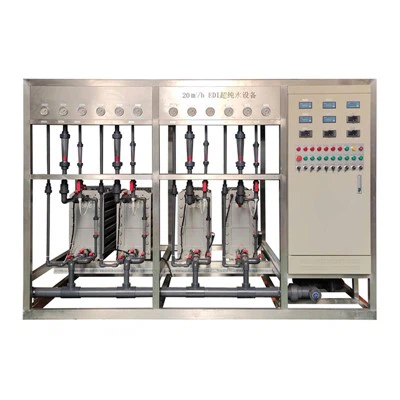
In conclusion, the water quality standard for a Deionized Water System in a laboratory depends on the specific applications for which the water will be used. However, in general, deionized water for laboratory use should have high resistivity, low TOC, low bacterial count, and low particulate matter. By adhering to industry standards and regulations and implementing proper monitoring and maintenance procedures, laboratories can ensure that they have a reliable supply of high-quality deionized water.
SWRO & BWRO Equipment If you are in the market for a Deionized Water System for your laboratory, I encourage you to contact us to discuss your specific needs. Our team of experts can help you select the right system and provide you with the support and guidance you need to ensure that your system operates effectively and efficiently. We are committed to providing high-quality products and excellent customer service to help you achieve your laboratory goals.
References
- American Society for Testing and Materials (ASTM) – Standard Specification for Reagent Water
- Clinical and Laboratory Standards Institute (CLSI) – Water for Clinical Laboratory Testing and Quality Control
- International Organization for Standardization (ISO) – Water quality standards for various laboratory applications.
Shandong Yanuo Environmental Protection Equipment Co., Ltd.
We’re well-known as one of the leading deionized water system manufacturers and suppliers in China, featured by quality products and good price. Please rest assured to buy bulk deionized water system made in China here from our factory. Customized orders are welcome.
Address: North Side of the Road, 1,000 Meters West of the Intersection of Fenghuangshan West Road and Provincial Highway S102, Wangfu Subdistrict, Qingzhou City, Weifang City, Shandong Province.
E-mail: ynhb.499973983@gmail.com
WebSite: https://www.zkyaruo.com/
