Hey there! I’m a supplier of packaging machines, and one question I often get from customers is, "What is the power requirement of a packaging machine?" It’s a crucial question, as the power requirement not only affects your electricity bills but also determines the machine’s performance and compatibility with your production environment. Let’s dig into this topic and break it down so you can make an informed decision when choosing a packaging machine. Packaging Machine

Understanding Power Requirements
First off, the power requirement of a packaging machine is basically the amount of electrical energy it needs to operate efficiently. It’s usually measured in kilowatts (kW) or horsepower (hp). A higher power rating generally means the machine can handle more complex tasks, operate at higher speeds, or deal with heavier-duty materials. But that also means it’ll consume more electricity.
The power requirement of a packaging machine depends on several factors. One major factor is the type of packaging machine. For example, a simple hand – operated sealing machine might have a very low power requirement, maybe just a few hundred watts. These machines are great for small – scale operations or for sealing lightweight packages. On the other hand, a high – speed automatic filling and sealing machine used in large – scale production facilities can have a power requirement of several kilowatts.
Another factor is the size and complexity of the machine. Larger machines with more components, such as multiple conveyors, sensors, and motors, will typically need more power to run. For instance, a big industrial shrink – wrapping machine that has a large heating element, a conveyor system, and a control panel will require a significant amount of power compared to a small table – top heat sealer.
The materials being packaged also play a role. If you’re packaging thick, dense materials like metal parts or heavy plastics, the machine may need more power to handle the extra weight and resistance. In contrast, packaging lightweight items like paper products or small plastic parts will require less power.
Different Types of Packaging Machines and Their Power Needs
1. Sealing Machines
Sealing machines are one of the most common types of packaging machines. As I mentioned earlier, hand – operated sealing machines are relatively low in power. They often run on standard household electrical outlets, with power requirements ranging from 100 – 300 watts. These are perfect for small businesses or home – based operations that need to seal small bags or pouches.
For semi – automatic and automatic sealing machines, the power requirement goes up. A semi – automatic band sealer, which is commonly used for sealing bags in food and pharmaceutical industries, usually has a power rating of around 500 – 1000 watts. Automatic high – speed sealing machines can consume up to 2 – 3 kW, especially those with advanced features like temperature control, adjustable sealing speed, and multiple sealing stations.
2. Filling Machines
Filling machines are used to fill containers with various products such as liquids, powders, or granules. Manual filling machines are the simplest and have the lowest power needs. They might only need a small motor to operate the filling mechanism, typically requiring less than 100 watts.
Semi – automatic filling machines, which are more commonly used in medium – sized production lines, usually have power requirements between 1 – 2 kW. These machines often come with a pump system for liquid filling or a feeding system for powder and granule filling.
Fully automatic high – speed filling lines, which are used in large – scale manufacturing plants, can have extremely high power requirements. They can range from 5 – 20 kW or even more, depending on the number of filling heads, the speed of operation, and the complexity of the control system.
3. Wrapping Machines
Wrapping machines are used to wrap products in materials like plastic film or paper. Simple table – top wrapping machines that are used for wrapping small items have power requirements in the range of 200 – 500 watts.
Pallet wrapping machines, which are designed to wrap large pallets of goods, typically need more power. A semi – automatic pallet wrapper might require around 1 – 2 kW, while a fully automatic high – speed pallet wrapping machine can consume 3 – 5 kW or more. The heating element in shrink – wrapping machines also adds to the power consumption. If the machine has a large heating chamber to shrink the plastic film tightly around the product, it can significantly increase the power requirement.
Why Power Requirements Matter
Knowing the power requirement of a packaging machine is important for several reasons. Firstly, it helps you determine the electricity costs associated with running the machine. If you’re running a business, keeping your energy costs in check is crucial for your bottom line. You don’t want to invest in a machine that consumes a huge amount of electricity and ends up eating into your profits.
Secondly, it ensures that your production facility can support the machine. You need to make sure that your electrical system can handle the power load of the packaging machine. If the power requirement exceeds the capacity of your electrical supply, it can lead to frequent power outages, damage to the machine, and even safety hazards.
Lastly, understanding the power requirement can help you choose the right machine for your needs. If you have a small – scale operation with limited production capacity and a tight electricity budget, a low – power machine might be the best choice for you. On the other hand, if you’re running a large – scale production line that needs to operate at high speeds, you’ll need a machine with a higher power rating, even though it’ll cost more to run.
How to Calculate Power Consumption
Calculating the power consumption of a packaging machine is relatively straightforward. You can use the following formula:
Power consumption (kWh) = Power rating (kW) × Operating hours
For example, if you have a packaging machine with a power rating of 2 kW and it runs for 8 hours a day, the daily power consumption would be 2 kW × 8 hours = 16 kWh.
To get the monthly or annual power consumption, you just multiply the daily consumption by the number of days in a month or a year.
Keep in mind that this is a rough estimate. The actual power consumption may vary depending on factors such as the machine’s operating load (whether it’s running at full capacity or not), the efficiency of the machine, and any standby power consumption when the machine is not in full operation.
Making the Right Choice for Your Business
When it comes to choosing a packaging machine with the right power requirement, it’s all about finding the right balance. You don’t want to go overboard with a machine that has more power than you need, but you also don’t want to buy a machine that can’t keep up with your production demands.
Think about your production volume. If you’re a small business that only needs to package a few hundred items a day, a low – power machine will be sufficient. But if you’re a large manufacturer with a high – volume production line, you’ll need a more powerful machine.
Consider your budget. In addition to the initial cost of the machine, factor in the long – term electricity costs. A higher – power machine may have a higher upfront cost and also cost more to run, but it could increase your production efficiency and output, which might offset the additional expenses in the long run.
Also, look at the future growth of your business. If you plan to expand your production in the coming years, it might be a good idea to invest in a machine with a slightly higher power rating to accommodate the increased demand.
Let’s Talk!
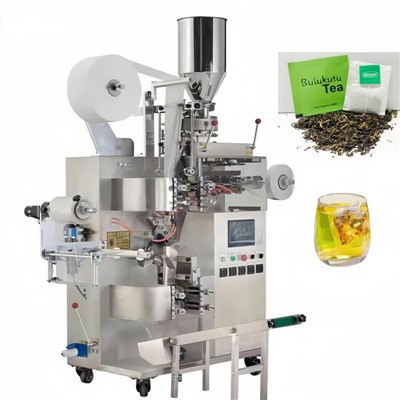
I hope this blog post has given you a better understanding of the power requirements of packaging machines. If you’re in the market for a packaging machine and have questions about power requirements, the best type of machine for your needs, or anything else, I’m here to help. Whether you’re a small startup or a large corporation, I’m confident I can find the right packaging solution for you.
Paper Filter Don’t hesitate to reach out for a free consultation. We can discuss your specific requirements, go over the different options available, and find a packaging machine that fits your budget and production needs. Let’s work together to take your packaging process to the next level!
References
- Packaging Machinery Manufacturers Institute (PMMI). "Packaging Machinery Technology and Trends."
- Industrial Packaging Association. "Guide to Packaging Machine Selection."
Hangzhou Wish Import & Export Trading Co., Ltd.
As one of the most professional packaging machine manufacturers and suppliers in China, we’re featured by quality products and good price. Please rest assured to wholesale bulk cheap packaging machine made in China here from our factory. Customized orders are welcome.
Address: Room 418, Yilong Business Building, Shangcheng District, Hangzhou City, Zhejiang Province
E-mail: chris@hzwishpack.com
WebSite: https://www.ecopacky.com/
