When I’m out at trade shows or hopping on calls with lab managers and production leads, one question comes up more than anything else: “How do I actually know if the analyzing instrument I’m looking at is any good?” It’s not just about specs on a data sheet—anyone can throw around terms like “±0.1% accuracy” or “1-second response time.” The real criteria are the stuff that matters day in and day out, when your process depends on those results being right, fast, and reliable. As someone who’s been an analyzing instruments supplier for over a decade, I’ve seen buyers fixate on the wrong things all the time, so let’s break this down like we talk shop, no jargon overload. Analyzing Instruments
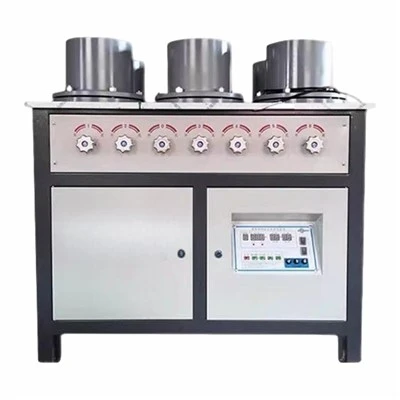
First off, accuracy is non-negotiable, but it’s not the whole story. Wait, hear me out—accuracy is how close your instrument’s reading is to the true value of what you’re measuring. For example, if you’re testing the purity of a chemical for pharmaceutical manufacturing, a 1% error might mean a batch gets rejected or, worse, gets released and causes issues down the line. But here’s the catch: you have to make sure the accuracy is verified under conditions that match your actual use. A lot of manufacturers test instruments in lab environments with controlled temperatures and clean samples, but if your plant has high humidity or samples with tiny amounts of contaminants, that spec goes out the window. So when I work with a new customer, I always ask them to share their typical sample conditions—like if they’re measuring in a dusty factory or a climate-controlled lab—and we run test runs with their own samples to prove the accuracy holds. That’s way more useful than a spec on a box.
Then there’s precision, and this is one that gets confused with accuracy all the time. Precision is how consistent the instrument’s readings are when you measure the same sample multiple times. Think of it like shooting a bow and arrow: accuracy is hitting the bullseye, precision is hitting the same spot every time, even if it’s not the bullseye. If your instrument is precise but not accurate, you can calibrate it to fix that, but if it’s not precise, you’re never going to get reliable results. For a food and beverage client I had a few years back, precision was make-or-break. They were testing sugar content in fruit juice batches, and if the readings bounced around 2 or 3 points every time they ran the same sample, they couldn’t nail the recipe consistency. We swapped their old instrument for one with way better precision, and within a month, their batch rejection rate dropped by 12%. That’s the kind of real-world win that specs can’t tell you.
Next up, usability and throughput. If your instrument is super accurate but takes 10 minutes per test, you’re not going to use it—especially in high-volume settings. I’ve seen companies drop $50k on a top-of-the-line analyzer only to stick it in a corner because it’s a pain to operate. Let’s talk about small things: does it have a touchscreen that’s easy to navigate, or do you have to memorize 15 button combinations? Can you load a sample in 30 seconds, or does it take 2 minutes of fiddling with glassware? And throughput—how many samples can it run in an hour? For a wastewater treatment plant, where they might have hundreds of samples a day, a slower instrument means longer wait times for data, which delays maintenance or process adjustments. I always emphasize to customers: prioritize what you need. If you’re a small lab with 10 samples a day, usability might matter more than max throughput. If you’re a factory pumping out 1,000 units an hour, fast, reliable throughput is key.
Stability and uptime are another big one that people overlook. An instrument that works 99% of the time sounds great, but if it breaks right in the middle of a production run, that’s a huge cost. Downtime isn’t just lost testing—it’s delayed shipments, missed deadlines, maybe even wasted raw materials. So when evaluating an instrument, check its mean time between failures (MTBF). A lot of suppliers publish this, but ask about mean time to repair (MTTR) too. If a part breaks, how fast can someone fix it? And do they have local support or stock common parts? We offer 24/7 remote support for all our instruments, and we stock parts in 12 different regions so we can get a replacement to a customer in 48 hours max. That’s the kind of stability that matters more than a 1% better accuracy spec. Also, look at drift—how much does the reading change over time without recalibration? An instrument that drifts 0.5% a week means you’re calibrating it every week, which takes time. One that drifts 0.1% a month means you only need to calibrate once a month. Small things add up over time.
Sample compatibility and maintenance. Every application has unique samples, and an instrument that works great for one might die for another. For example, if you’re measuring corrosive gases, you need an analyzer with hardware that can handle that corrosion—otherwise, it’ll corrode in 6 months. Or if your samples are viscous liquids, you need a sampling system that doesn’t clog up. Maintenance is another thing: how often do you need to replace filters, probes, or other parts? How much do those parts cost? A $20k instrument that needs a $500 filter every month might end up being more expensive long-term than a $25k one with a $100 filter that only needs changing twice a year. I had a customer who switched to our analyzers because their old one required a $1,200 annual calibration and a new sensor every 18 months. Our instrument only needs a $200 annual calibration and a sensor every 3 years—over 5 years, that’s a $3,000 difference. That’s the stuff that adds up to real savings.
Data integrity and connectivity. These days, you can’t just have an instrument that spits out a number on a screen. You need it to connect to your lab management system or factory control system, right? So does it have standard ports—like USB, Ethernet, or Wi-Fi—or do you need a custom adapter that costs extra? Also, can you export data in a format that works with your software, like CSV or Excel? And more importantly, is the data reliable for regulatory purposes? If you’re in a regulated industry like pharmaceuticals, food safety, or aerospace, you need the instrument’s data to be auditable—no one can alter readings, and there’s a clear record of every test. We make sure all our analyzers meet GMP and ISO standards for data integrity, so customers don’t have to worry about failing an audit because their instrument’s data is sketchy. A lot of cheaper instruments skip this part, and that ends up being a huge headache down the line.
Support and total cost of ownership (TCO). I touched on this a little with maintenance, but TCO is the big picture: not just the upfront cost, but everything that comes after. Training, installation, repairs, parts, calibration—all of that. A cheap instrument with no support might seem like a steal, but if you have to pay for an outside technician to install it every time, or if you can’t find replacement parts, that’s going to cost you way more in the long run. As a supplier, we don’t just sell instruments—we help with installation, train your team on how to use it, and are there if something goes wrong. We also offer extended warranties and calibrated maintenance packages, so customers can budget for those costs instead of dealing with unexpected bills. I always tell buyers: don’t shop for the cheapest upfront price. Shop for the best value over the lifespan of the instrument.
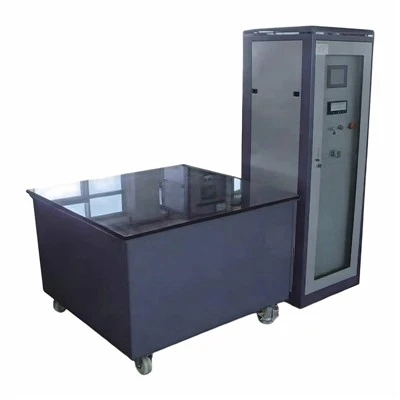
I’ve seen too many people make the mistake of choosing an analyzing instrument just based on a flashy spec sheet. But at the end of the day, the best instrument for you is the one that fits your specific needs: it’s accurate for your samples, precise enough for your consistency goals, easy to use for your team, reliable when you need it, and doesn’t break the bank over time. If you’re in the market for a new analyzer and want to talk through what your operation actually needs, feel free to reach out to discuss your requirements and see which of our solutions would work best for you. We can even run a free trial with your actual samples so you can test the performance for yourself.
Cement Testing Instrument References
- ISO 6507-1:2018, Non-destructive testing — Hardness measurement — Part 1: Vickers hardness test
- ASTM E1019-18, Standard Test Methods for Determination of Gaseous Elements in Metals
- Laboratory Equipment Industry Association (LIEA) Guidelines for Analyzing Instrument Performance Evaluation, 2022
- US Food and Drug Administration (FDA), Guideline on Data Integrity for Pharmaceutical Laboratories, 2021
- Process Analytical Technology (PAT) Framework, International Society of Automation (ISA), 2020
Hebei Wanluda Testing Instrument Equipment Co., Ltd.
As one of the most professional analyzing instruments manufacturers and suppliers in China, we have world-leading production equipment and strong manufacturing capabilities. Please rest assured to buy advanced analyzing instruments made in China here from our factory.
Address: Zhouguantun Village, Xian County, Cangzhou City, Hebei Province, P.R.China
E-mail: wldinstrument@163.com
WebSite: https://www.wldinstrument.com/
