Hey there, if you’ve ever found yourself staring at a pile of nylon staple fiber, wondering how the heck to dissolve it without turning your batch into a total mess—well, you’re not alone. I’ve been in the nylon staple fiber game for over 12 years now, and let me tell you, most of the calls I get (from makers, lab techs, small production teams) aren’t about pricing or minimum orders—they’re about this exact problem. Like, sure, nylon’s durable—it’s what makes your tights stretchy, your carpet stand up to dog claws, and your sewing thread tough—but that same durability is why it’s such a pain to dissolve for specific uses, right? Whether you’re making a custom adhesive, a water-based coating, or even a specialty filter media that needs to break down just enough to bond with another material, dissolving nylon staple isn’t one-size-fits-all. Stick around, I’ll walk you through what actually works (and what’s total garbage that’ll waste your time). Nylon Staple Fiber
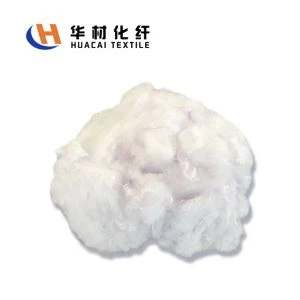
First off, let’s cut the jargon for a sec: nylon staple is just short, cut nylon fibers—usually Nylon 6 or Nylon 6,6, the two big ones you’ll see everywhere. The difference between those two matters a ton when it comes to dissolving, by the way. Nylon 6 has a lower melting point and slightly different molecular structure, so it tends to dissolve a little easier than Nylon 6,6 if you’re using the same method. Most suppliers like me stock both, so if you tell us what you’re using it for, we’ll even point you toward the right grade to make dissolving way less of a headache. Cool, moving on.
The biggest mistake people make when trying to dissolve nylon staple is grabbing the first solvent they think might work and dumping it in hot water, only to end up with a goopy, uneven mess of undissolved clumps and tiny fiber bits that never break down. Why? Because nylon’s polyamide structure—those repeating amide groups—means it’s polar, so it reacts with chemicals that can form hydrogen bonds with those groups. Skip the stuff that’s too non-polar (like gasoline or mineral spirits) and you’ll save yourself a frustration-induced late-night trip to the hardware store.
Let’s break down the methods that actually work, based on what your end application is, because that’s the key here. You don’t need to dissolve the whole fiber into a thin liquid if you just need to coat something—sometimes partial solvation is better. I’ll give you real examples from customers I’ve worked with, so this isn’t just textbook stuff.
First method: Hot acid or alkaline solutions. Wait, hold on—don’t run off yelling about concentrated acid. We’re talking diluted stuff, and only for specific uses. Most people don’t need 98% sulfuric acid (that’s for lab stuff, not small-batch production). For dissolving nylon staple when you need a fast, thorough break-down, dilute formic acid or acetic acid is my go-to rec for most small to medium users. I had a customer last year making a textile adhesive for non-woven fabric—they needed the nylon staple to dissolve fully so it could create a strong, flexible bond without leaving rough fiber patches. We sent them Nylon 6 staple (since it’s easier here) and walked them through mixing a 50/50 ratio of 85% formic acid and deionized water, heating it to 60-70°C (not boiling—boiling makes it evaporate too fast) and stirring gently for 45 minutes. The result was a smooth, brownish solution perfect for their adhesive. The catch here? You have to neutralize it after with a base like sodium bicarbonate if you’re using it on anything that needs to be pH-neutral (like paper coatings or child-safe fabrics). Also, this stuff stinks—formic acid has that sharp, vinegar-y but way stronger smell, so make sure you’re in a well-ventilated space. I always tell customers: if you’re doing this in your garage, crack two windows and use a fan. Don’t do it in your kitchen, trust me.
Alkaline solutions work too, but only with high heat and pressure, right? I’ve seen people try to use lye (sodium hydroxide) at 100°C and 15 psi, but that’s more for industrial-scale operations. The problem with alkaline is it can degrade the nylon too much if you leave it too long, leading to weak, brittle solutions. It’s not great if you need the nylon’s molecular strength to stay intact for your application. If you’re a big manufacturer with a pressure reactor, sure, it’s cheaper than acid, but for small batches? Stick with diluted acid.
Second method: Organic solvents, for when you don’t want to mess with strong acids or bases. This is the one I recommend most for labs, custom craft makers, or anyone doing small-batch work where safety is a top priority. The gold standard here is a mix of phenol and chloroform, but wait—chloroform is toxic, so if that’s a no-go, there’s a newer alternative: methylpyrrolidone (NMP). A customer of mine makes specialty inks for 3D printing, and they needed a dissolved nylon staple to add durability to their ink. We sent them Nylon 6,6 staple (they needed higher heat resistance for their prints) and told them to use a 70/30 mix of NMP and ethanol, heating to 80°C and stirring for 2 hours. The solution was clear, not that brown goop you get with acid, and perfect for their ink. The downside? NMP is a bit pricier than acid, and some regions have regulations around its use, so check your local chemical rules before you stock up. Also, never use this method if you’re working with food-contact applications—NMP isn’t safe for that.
Wait, what if you don’t need to fully dissolve the nylon staple? A lot of people I talk to don’t realize that partial solvation is a thing, and it’s way easier. Like, if you’re making a composite material where you just want the surface of the nylon fibers to soften and bond with a resin, you don’t need the whole fiber to turn to liquid. You can use vapor exposure—blowing hot solvent vapor (like trichloroethylene, or even acetone for surface softening) over the nylon staple for 10-15 minutes, and the outer layer will soften without turning the whole thing into a solution. I had a client who makes durable plastic packaging for pet food use this method—they just wanted the nylon staple in their packaging to stick to the polyethylene layer, no full dissolution needed. This cuts down on chemical waste, is way faster, and works great for that kind of application. Way less hassle, honestly, than full dissolution.
Now, let’s talk about common mistakes that ruin the whole process, because I’ve seen them all. First, not pre-treating the nylon staple. If your staple has any oil or sizing on it (most commercial nylon staple comes with a tiny amount of lubricant to keep it from clumping during processing), that will block the solvent from reaching the nylon fibers. Soak it in a mild detergent solution for 30 minutes, rinse, and dry it fully before you try to dissolve it. I can’t tell you how many customers skip this step and end up with half-dissolved fibers, like they tried to dissolve a greasy piece of paper. Second, wrong temperature. Too low, and the solvent can’t penetrate the fiber—you’ll have a beaker full of fiber bits floating around. Too high, and the solvent evaporates too fast, leaving you with a thick, goopy mess that’s impossible to work with. I always say: check the solvent’s boiling point, and keep your temp 10-15°C below that. Third, using the wrong nylon grade. Like I said earlier, Nylon 6 dissolves easier than Nylon 6,6. If you try to use Nylon 6,6 with diluted acetic acid, you’ll be stirring for 3 hours and still have undissolved clumps. Hit me up before you start, and I’ll tell you exactly which grade to use for your application—saves you so much time.
What about application-specific tips? Let’s get real, because this blog isn’t just about chemistry—it’s about what works for your end product. If you’re making water-based coatings, acid-based solutions are a no-go because they don’t mix well with water and need neutralization. Stick with NMP or another water-miscible organic solvent (like dimethylformamide, DMF, but again, check safety rules). If you’re working with medical or food-grade products, don’t use harsh acids or toxic solvents. There are actually bio-based solvents now—things like gamma-butyrolactone (GBL) derived from corn— that work great for dissolving nylon staple and are safe for food contact. One of our clients uses this for edible food packaging coatings, and they love it. No weird chemicals, just a smooth nylon solution that bonds perfectly. If you’re making filters or non-woven fabrics that need some nylon structure but also need to hold a resin, partial solvation is your move. You get the strength of the nylon fibers with the bonding you need, no full dissolution required.
Another thing: concentration matters. If you want a thick solution (for adhesives or coatings), use a higher ratio of solvent to nylon—like 10 parts solvent to 1 part staple. If you want a thin solution (for inks or impregnating materials), use a 20:1 ratio. Don’t just dump a bunch of staple in a beaker and hope it turns thin—measure the ratios. I always tell customers: start small. Do a 100ml test batch first, see how it works, then scale up. No one wants to waste 5 gallons of solvent and 10 lbs of nylon staple on a batch that doesn’t work because they skipped the test.
Wait, what if you’re trying to dissolve nylon staple without any harsh chemicals? Is that even possible? Yes, but it’s slow. Super slow. You can boil nylon staple in a mix of water and a small amount of surfactant (like dish soap) for 4-5 hours, and it will partially break down, but it won’t fully dissolve. This is only for really casual uses, like craft projects where you don’t need a strong bond. Don’t rely on this for industrial or commercial applications—it’s just not consistent. I’ve had hobbyists come to me saying they tried this and got a weird, smelly goop that stained their fabric, so I always warn them it’s not reliable.
Let me circle back to being a nylon staple fiber supplier for a sec, because that’s my bread and butter. The biggest thing I’ve learned over the years is that customers don’t just need fibers—they need solutions. If you come to me saying “I need to dissolve nylon staple for X application,” I’m not just going to tell you “here’s our staple” and send you on your way. I’ll ask you a dozen questions: what’s your end product? Is it for food contact? Industrial? Crafts? Do you need full dissolution or partial? What safety rules do you have to follow? That’s how I give you the right grade, and even tweak the method to make it work for you. Last quarter, I had a startup that makes eco-friendly packaging come to me—they needed to dissolve nylon staple to make a compostable adhesive that also has strong barrier properties. We worked with them to adjust the concentration of GBL and the heating time, and now their adhesive is selling to major grocery chains. That’s the stuff I love—helping people turn their ideas into something real, not just shipping fibers.
Now, a quick note on safety, because this is non-negotiable. All the solvents I mentioned are flammable, toxic, or both. Wear gloves, goggles, a mask, work in a fume hood if you can, and follow all local safety regulations. Don’t leave hot solvent unattended, and store chemicals properly. If you’re not sure how to handle something, Google it, or call me—I’ll tell you what I know. I’ve been doing this long enough to know the scary stories, and I don’t want anyone getting hurt over a dissolving project.
So to wrap this up: dissolving nylon staple isn’t rocket science, but it’s not guessing either. The key points are: pick the right nylon grade (Nylon 6 for easier dissolution, Nylon 6,6 for higher heat resistance), choose your solvent based on your application (acid for fast full dissolution, organic solvents for low-toxicity, partial solvation if you don’t need full liquid), pre-treat your staple to remove sizing, stick to the right temperature and concentration, and always do a small test batch first. If you’re still stuck, just reach out—whether you’re a small craft maker, a startup, or a big manufacturing team, I can help you figure out what works for your specific application. No vague answers, no pushy sales stuff—just real advice from someone who’s been in the thick of nylon staple for over a decade.

Now, if you’re ready to get the right nylon staple for your dissolving project, or have more questions about the method, hit me up. We can talk specs, samples, and whatever else you need to get your project off the ground. Don’t overcomplicate it—let’s make this work for you.
Nylon Staple Fiber References
- Nylon Fiber: Structure, Properties, and Applications, Textile Chemistry Journal, 2021
- Solubility of Polyamides in Organic and Inorganic Solvents, Journal of Applied Polymer Science, 2019
- Eco-friendly Solvents for Polyamide Processing, Sustainable Materials and Technology, 2022
- Industrial Methods for Dissolving Synthetic Fibers, Manufacturing Chemistry Review, 2020
Huacai Group
Huacai Group is well-known as one of the leading nylon staple fiber manufacturers and suppliers in China, featured by quality products and good service. Please feel free to buy bulk nylon staple fiber at competitive price from our factory.
Address: No.188 Zhenyang Road, Qingyang Town, Jiangyin City, Jiangsu Province, China
E-mail: sales@huacaifiber.com
WebSite: https://www.huacaifiber.com/
