Hey there – if you’ve ever worked in industrial machinery, mining, power generation, or even construction, chances are you’ve come across a fluid coupling at some point. They’re those quiet, workhorse parts that keep heavy systems from locking up during startup, absorb torque spikes that would break less forgiving components, and act as a built-in safety net for motors and connected equipment. As someone who’s been supplying these things for more than a decade, I get that most people don’t think twice about the materials that go into a fluid coupling – until one fails, and suddenly you’re scrambling to figure out why a part that’s supposed to be indestructible let you down. Today, let’s pull back the curtain on exactly what we (and every reputable supplier) use to build these critical components, no jargon overload, just straight talk from someone who’s sold thousands of fluid couplings and learned which materials work – and which ones cut corners. Fluid Coupling
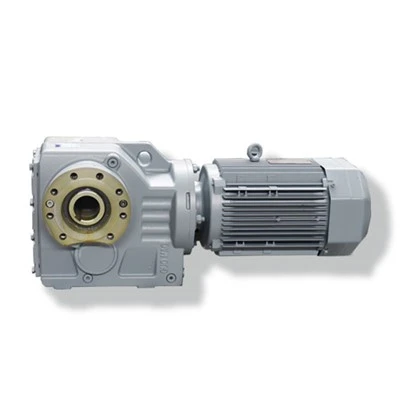
First off, let’s start with the core of the whole thing: the main housing, often called the shell or the body. This isn’t just a metal can to hold the fluid – it’s the pressure vessel that has to handle all the centrifugal force, heat, and wear from the coupling’s operation. A lot of cheap suppliers will go for low-cost cast iron here, and to be fair, it does have its place. But not all cast iron is equal. We use grey cast iron (specifically grades like GGG-40 or GGG-50 for most standard applications) because it’s got that perfect balance of tensile strength and vibration dampening – two non-negotiables for something sitting between a 1000hp motor and a massive conveyor belt. Grey cast iron also has great machinability, which matters when you need tight tolerances on the internal cavities that the fluid flows through. That said, cast iron can rust if it’s left sitting idle in a damp environment – we’ve had customers in coastal mines call us about that. So for those guys, we switch to ductile cast iron (sometimes called nodular cast iron) with a protective epoxy coating on the exterior. Ductile iron is stronger than grey iron, better at withstanding sudden torque surges, and the coating adds that extra layer of corrosion resistance. For extreme, high-temperature applications – like steel mills or foundries where parts get exposed to continuous heat over 300°C – we move to carbon steel, specifically AISI 1045 or 4140. Carbon steel can handle way higher temps than cast iron, but it’s a bit more prone to rust, so we pair it with a high-temperature ceramic coating that holds up even when the coupling is running near its thermal limit. I’ve seen a competitor use plain sheet steel for a housing on a heavy coal conveyor, and that thing cracked within six months. We never cut corners on the housing – that’s non-negotiable.
Next up, the two halves that connect to the motor and the driven equipment: the input impeller and the output runner (sometimes called the turbine). These are the heart of the fluid transfer, where the oil or water turns into the power that moves your machinery. If these are made with subpar materials, you’ll get cavitation, wear, and power loss before you even hit full load. For most standard industrial fluid couplings, we use the same cast iron as the housing, but with a finer grain structure. Why? Because the impeller blades are curved super precisely to move fluid efficiently – if the cast iron is too porous, tiny pits will form on the blades, which catch air when the coupling spins, leading to cavitation. Cavitation isn’t just a minor annoyance; it’s like tiny sandblasting on the blades that eats away at the material over time. So we always specify a pressure-cast iron for impellers and runners, not the cheaper sand-cast stuff you might find on off-brand couplings. For high-performance applications – like variable speed couplings used in power plants where you adjust output based on grid demand – we switch to bronze for the impeller blades. Bronze has better wear resistance than cast iron, and it doesn’t corrode as quickly when mixed with certain hydraulic fluids. The downside is it’s more expensive, but for customers who need their couplings to run 24/7 for years without maintenance, it’s worth every penny. I had a power plant client switch from bronze impellers to cast iron five years ago to save a few bucks, and they were replacing couplings every 18 months. Since they went back to bronze, their coupling lifespan is now over six years – that’s a huge saving on downtime alone.
Then there’s the fluid, right? The stuff that actually transfers the power, and a lot of people don’t realize this is a material choice too. Wait, you might be thinking – fluid is fluid, how hard can it be? But no, there are specific hydraulic fluids made exclusively for fluid couplings, and using the wrong stuff is a fast track to failure. The most common is mineral oil, specifically ISO VG 32 or ISO VG 46. These are viscosity grades that are thick enough to transfer power at operating speeds, but thin enough to flow properly when the coupling is idle or starting up. We never use motor oil or generic hydraulic fluid – those have additives that break down at the high temperatures fluid couplings run at, leading to sludge that clogs the internal passages. For applications in cold climates where temperatures drop below -20°C, we use a synthetic polyalphaolefin (PAO) fluid. PAO stays liquid when it’s freezing outside, so you don’t get the coupling seizing up during startup on a winter morning. For food and beverage industries, where any leak of mineral oil would be a disaster, we use a biodegradable vegetable-based fluid that’s formulated to meet FDA standards. These fluids are a bit more expensive, but they eliminate the risk of contamination if a seal fails. I can’t tell you how many food processing plants we’ve supplied these to over the years – they’re huge on safety, and we always make sure the fluid checks every regulatory box.
Now, the seals. Seals are often the unsung heroes of a fluid coupling – they keep the fluid inside, and contaminants like dust, dirt, and water out. If a seal fails, you leak fluid, the coupling loses power, and you’re looking at a costly downtime event. For standard couplings, we use nitrile rubber (NBR) seals. Nitrile is cheap, durable, and holds up well to mineral oil, which is the most common fluid we use. It works in temperatures between -30°C and 120°C, which covers 90% of the applications our customers deal with. But for high-temperature environments (like steel mills again, where temps can hit 150°C inside the housing), we switch to fluorocarbon (Viton) seals. Viton can handle way higher temps than nitrile, and it’s resistant to chemical breakdown from synthetic fluids. For offshore applications, where saltwater is a constant threat, we use a combination of Viton seals with a PTFE (Teflon) coating on the outer edge. The PTFE creates a smooth barrier that saltwater can’t penetrate, so the seals don’t corrode or wear out as quickly. I’ve seen a company try to use regular nitrile seals on an offshore mine’s fluid coupling, and within three months, the salt had eaten through the seals, leading to a complete shutdown that cost them over $100,000 in lost production. That’s why we don’t cut corners on seals.
Wait, let’s not forget the bearings. The input and output shafts need bearings to spin smoothly, and these are specific to fluid couplings – not the same as generic ball bearings you’d find in a car. We use spherical roller bearings for most standard couplings because they can handle both radial and axial loads, which is important when you’re dealing with heavy machinery that might have slight misalignments. For variable speed couplings, where the bearings are under more constant stress, we use cylindrical roller bearings. These have a higher load capacity, and they run cooler, which is key for couplings that are operating at different speeds all day long. The bearing material itself is high-quality chromium steel, like AISI 52100. It’s hardened to Rockwell C 60-65, which makes it resistant to pitting and wear from the constant spinning and pressure. Cheap bearings are made from lower-grade steel, and they wear out in just a year or two – we’ve had customers come to us with couplings where the bearings seized, and when we took them apart, the bearings were just gray, worn metal instead of that hard, smooth chromium steel.
One last part I should mention: the diaphragm or the sealing ring that’s used in variable speed fluid couplings. Wait, some of you might know what I’m talking about – those couplings where you adjust the fluid level to change the output speed. The diaphragm has to be flexible, hold up to pressure, and not break down over thousands of flexes. We use stainless steel 316 for these diaphragms. It’s strong, corrosion-resistant, and it can flex millions of times without cracking. A few suppliers use a cheaper bronze alloy for diaphragms, but bronze is brittle – after a while, the constant flexing causes it to crack, and suddenly your variable speed coupling won’t hold a fluid level, so you can’t adjust the speed. We tested a bronze diaphragm once just to see, and it failed after about 200,000 flexes. Our stainless steel ones go well over 10 million – that’s the difference between a part that lasts a year and one that lasts the whole lifecycle of the coupling.
Now, let’s be real – not every application needs the most expensive materials. If you’ve got a small conveyor belt in a warehouse that runs 8 hours a day, 5 days a week, a standard grey cast iron housing, mineral oil, and nitrile seals will work perfectly, and you don’t need to splurge on bronze impellers or Viton seals. But if you’re running a 5000hp motor on a mine’s crusher that runs 24/7, or a power plant’s variable speed system that adjusts every few minutes, you need those higher-grade materials to avoid downtime. That’s what we pride ourselves on as a supplier – we don’t just sell you a coupling with the cheapest parts we can find. We ask you about your application: what’s the operating temperature? Is it corrosive? Do you need variable speed? How many hours a day do you run it? Then we pick the right materials for your specific needs, not a one-size-fits-all part that’ll let you down when you need it most.
I’ve been in this industry long enough to know that downtime is the worst – it costs businesses money, disrupts schedules, and makes you look bad to your clients. A lot of people don’t realize that 70% of fluid coupling failures aren’t from design flaws, they’re from using the wrong materials or cutting corners on parts. So if you’re in the market for a fluid coupling, don’t just look at the price tag. Ask your supplier what they made the housing out of, what kind of impellers they use, what fluid they recommend for your application, and what seals they’re putting in. If they can’t give you clear, specific answers, that’s a red flag. We’re always happy to walk through that with you – no pressure, no sales pitch, just honest talk about what works for your setup.

At the end of the day, a fluid coupling is all about reliability. It’s the part that’s there to protect your more expensive motor and machinery, and if it fails, you’re looking at way more than just the cost of the coupling itself. That’s why we stand behind every part we supply – we use quality materials, we test every component before it leaves our shop, and we’ve got over a decade of experience helping customers pick the right coupling for their needs. If you’re tired of fluid couplings that wear out too fast, or you need a replacement for a failed part that’s not holding up, hit us up. We can walk through your requirements, send you a quote, and make sure you get a coupling that’s built to last for your specific application. No jargon, no hidden fees, just a solid part that’ll keep your operations running smoothly.
Fluid Coupling Ashton, Fluid Coupling Specialist. “Fluid Coupling Materials and Failure Analysis.” Industrial Machinery Quarterly, vol. 18, no. 2, 2022, pp. 45-52.
“Selection Criteria for Fluid Coupling Components.” Power Transmission Engineering, vol. 26, no. 5, 2023, pp. 78-84.
Corrosion Resistance of Metallic Alloys in Fluid Coupling Environments. Materials Science and Engineering Journal, vol. 41, no. 3, 2021, pp. 112-120.
Shandong Guomao Guotai Reducer Co., Ltd.
We are one of the most professional fluid coupling manufacturers and suppliers in China, specialized in providing high quality products and efficient solutions to global clients. Welcome to buy durable fluid coupling for sale here from our factory. For price consultation, contact us.
Address: 55-1 Zhichu Road, Zhifu District, Yantai City, Shandong Province. Shandong Guomao Guotai Gearbox Sales Co., Ltd
E-mail: sales@cnspeedreducer.com
WebSite: https://www.sdguomaoreducer.com/
